1. Flight
The drone flies a planned grid (and, for tall piles, an extra oblique pass) with high forward and side overlap so every face of the pile is photographed.

Drone survey
By the NVX engineering team, New Delhi · 3 November 2026 · 6 min read
A drone measures a stockpile by photographing it from many overlapping angles, building a 3D surface model and calculating the volume between that surface and the ground beneath it. For quarries, mines, cement, steel and power plants, it replaces slow walking surveys with one short flight and a repeatable record of every pile. Here is how it works, what affects accuracy, and what you should receive.
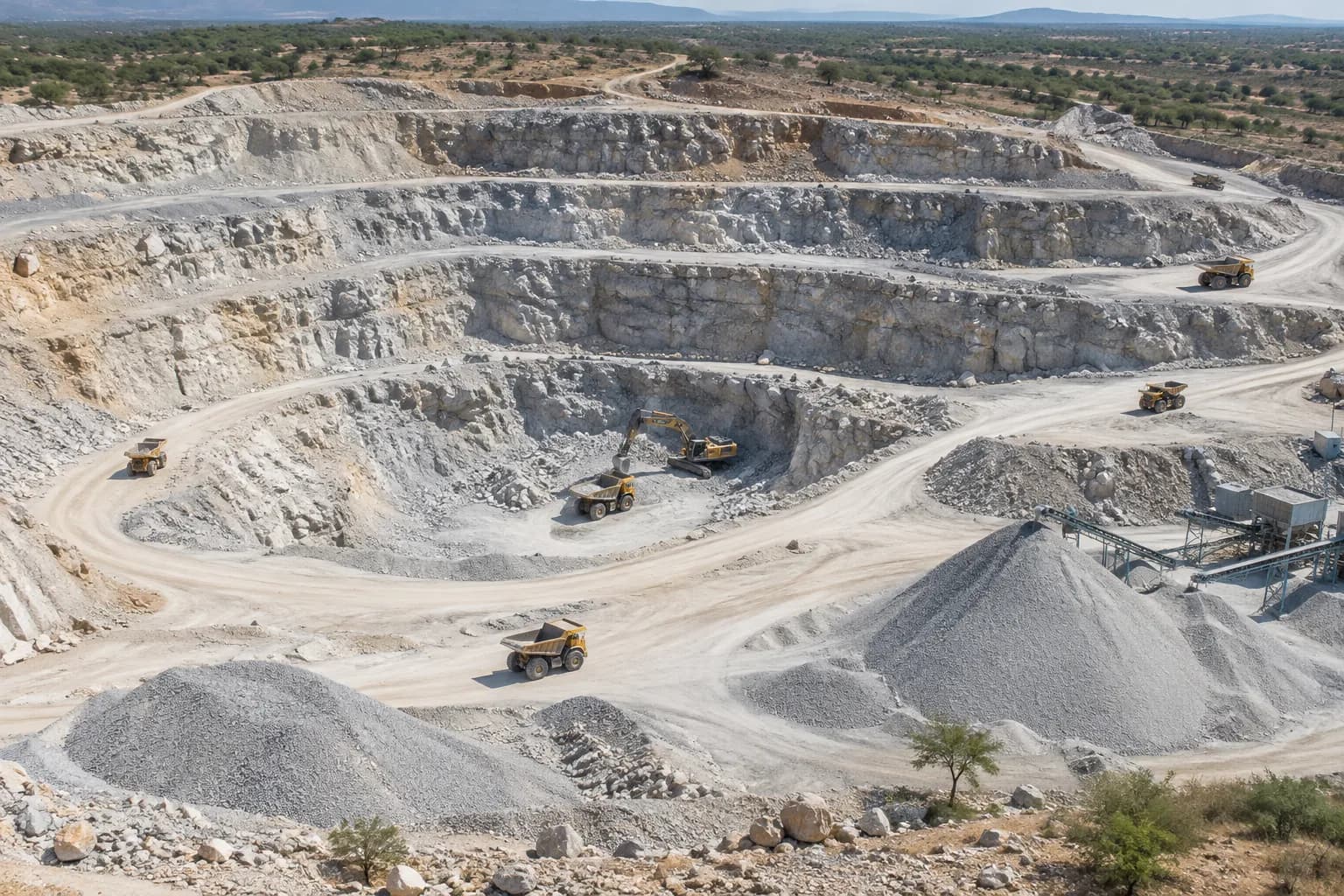
The method is photogrammetry: many overlapping photos become measured 3D data.
The drone flies a planned grid (and, for tall piles, an extra oblique pass) with high forward and side overlap so every face of the pile is photographed.
Ground control points measured with survey GNSS, or RTK/PPK positioning on the drone, tie the model to real coordinates and let you check accuracy.
Software builds a point cloud and a digital surface model (DSM) of the site.
Each pile needs a base: usually a plane through points around its toe, or an earlier survey of the bare ground. The choice of base matters as much as the flight.
The volume is the space between the surface and the base, reported per pile with the pile boundary, base method and date.
Two surveys of the same pile can differ if these are not controlled.
Without control points or RTK/PPK, the model can be shifted or tilted, which changes the volume.
A wrong toe line or base plane is the most common source of volume error, especially for piles on uneven ground or against walls.
Low sun, harsh shadows, dust and wind-blown material reduce matching quality.
The survey measures volume, not weight. Converting to tonnes needs a bulk density for that material, which you supply or measure.
For monthly stock reports, fly the same plan with the same control and base method each time, so changes are real changes.
Ask for these in the quote so results can be checked and repeated.
Volume per pile with ID, date, base method and boundary.
A measured aerial photo map of the site with each pile outlined.
For your engineers to re-check or re-calculate.
Check-point errors, so you know how reliable the numbers are.
Drones suit open yards, quarries and pits where piles can be seen from the air. Piles inside closed sheds or under roofs need a different method, such as ground or indoor laser scanning. Always confirm the airspace zone on DigitalSky before flying, as sites near airports or defence areas may need permission.
FAQ
With good ground control or RTK/PPK and a sensible base surface, drone volumes are accurate enough for stock reconciliation and planning. Ask for the check-point errors in the report so you can judge the accuracy for your site.
No. A drone measures volume. Tonnes = volume × bulk density, and the density for your material must be supplied or measured separately.
Many sites survey monthly or at each accounting period. Using the same flight plan and base method each time makes the trend reliable.
Flying a typical yard takes a short time on site; processing and the report usually take a few days, depending on the number of piles and outputs.
Usually not by drone photogrammetry. Covered piles need ground-based or indoor laser scanning.
Get a quote
NVX replies with a recommended configuration and quotation.
Related