Hotspots in cells
Cracks, defects or partial shading make single cells run hot.

Thermal inspection
By the NVX engineering team, New Delhi · 3 November 2026 · 6 min read
A thermal drone finds solar plant faults by their heat: a cracked cell, a failed bypass diode or a disconnected string runs at a different temperature from healthy modules. Flying a plant is far faster than checking modules one by one on foot, and the result is a map of every anomaly for the maintenance team. Here is what it finds, the conditions it needs and what a useful report looks like.
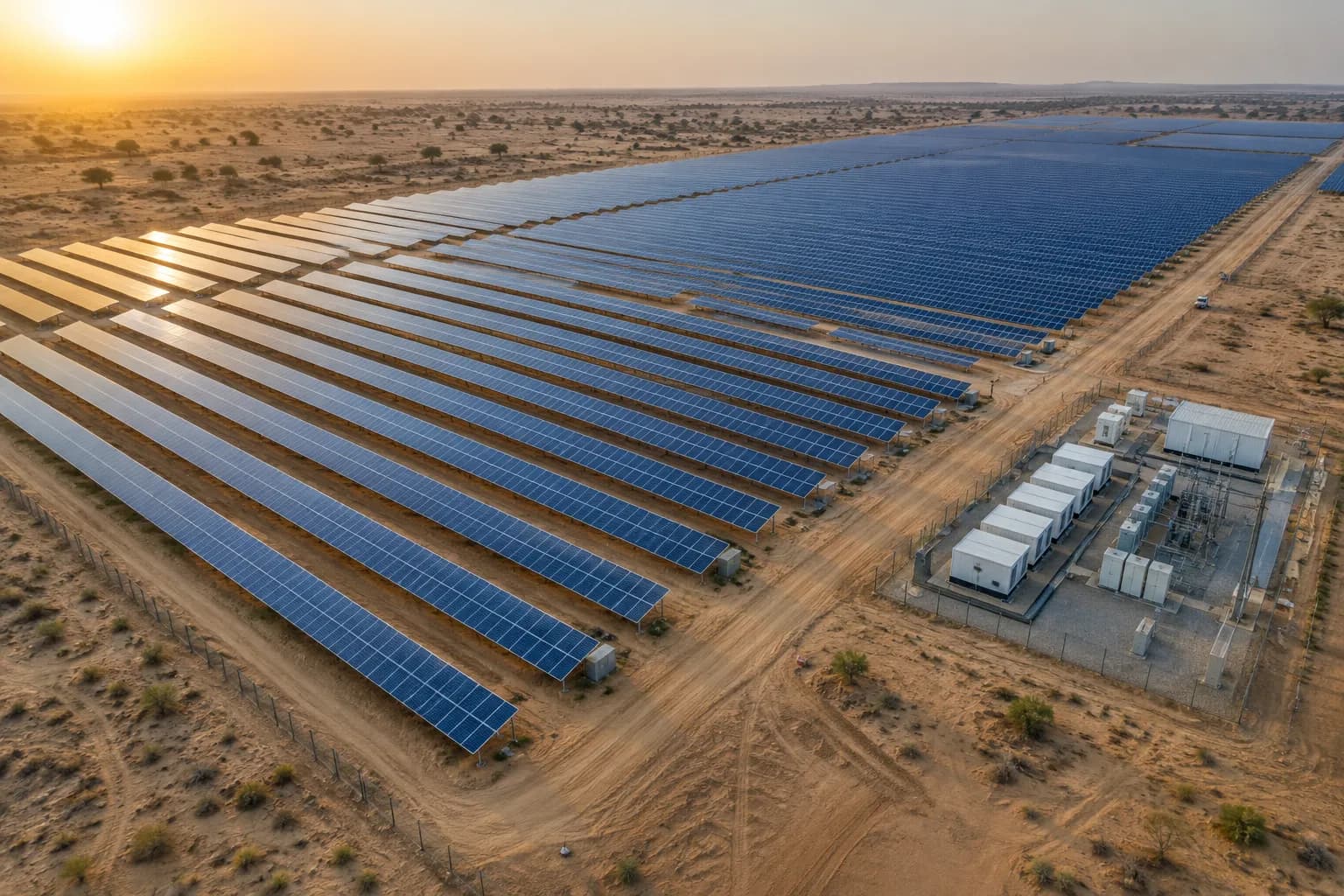
Typical anomalies seen from the air.
Cracks, defects or partial shading make single cells run hot.
Show as one sub-string (often a third of a module) warmer than the rest.
A whole string or module that is not producing appears uniformly warmer.
Dirt, bird droppings and vegetation show as patterns that change after cleaning.
Local heating at connectors and boxes.
Thermal results depend on the plant working hard. The international guideline for aerial thermography of PV plants, IEC TS 62446-3, calls for strong, steady sunlight (an irradiance of at least 600 W/m² on the modules) and stable conditions. In practice that means a clear day around the middle of the day, low wind and dry modules. Readings taken in cloud or right after cleaning can hide faults.
A typical workflow.
Flight lines over the module rows at a height that gives enough thermal pixels per cell to see a single hotspot.
Radiometric thermal images (each pixel holds a temperature) plus visible images of the same areas.
Each anomaly is positioned on a map or site layout with row and module references.
Anomalies are grouped by type and severity so the maintenance team can prioritise.
A list of anomalies with location, type, temperature difference and a thermal plus visible image for each; a plant map showing where they are; and a summary by block and severity. Ask for the raw radiometric images too, so the next inspection can be compared like for like.
FAQ
No. Solar thermal inspection needs strong sunlight so the modules are producing power; most faults only show when current flows.
A radiometric thermal camera, where each pixel stores a temperature, plus a visible camera to check soiling and physical damage.
Many owners inspect at commissioning, before warranty expiry and at least once a year, plus after storms or a drop in performance.
They answer different questions. A drone finds where the faults are across the whole plant quickly; electrical tests then confirm and quantify specific strings.
Drones fly under India's Drone Rules 2021. Check the airspace zone on DigitalSky; plants near airports or defence areas may need approval.
Get a quote
NVX replies with a recommended configuration and quotation.
Related