Toy drones
Usually tens of metres to a couple of hundred metres.

Drone basics
By the NVX engineering team, New Delhi · 22 October 2026 · 5 min read
Range is how far a drone can fly from its controller and still keep a reliable link. Advertised ranges are measured in ideal conditions; in Indian cities with buildings and Wi-Fi interference, real range is much shorter. And the law limits how far you should fly anyway.
Rough figures; your conditions decide the real number.
Usually tens of metres to a couple of hundred metres.
Several kilometres in open, interference-free areas.
Depends on the radio and video system; long-range builds can go far, within the law.
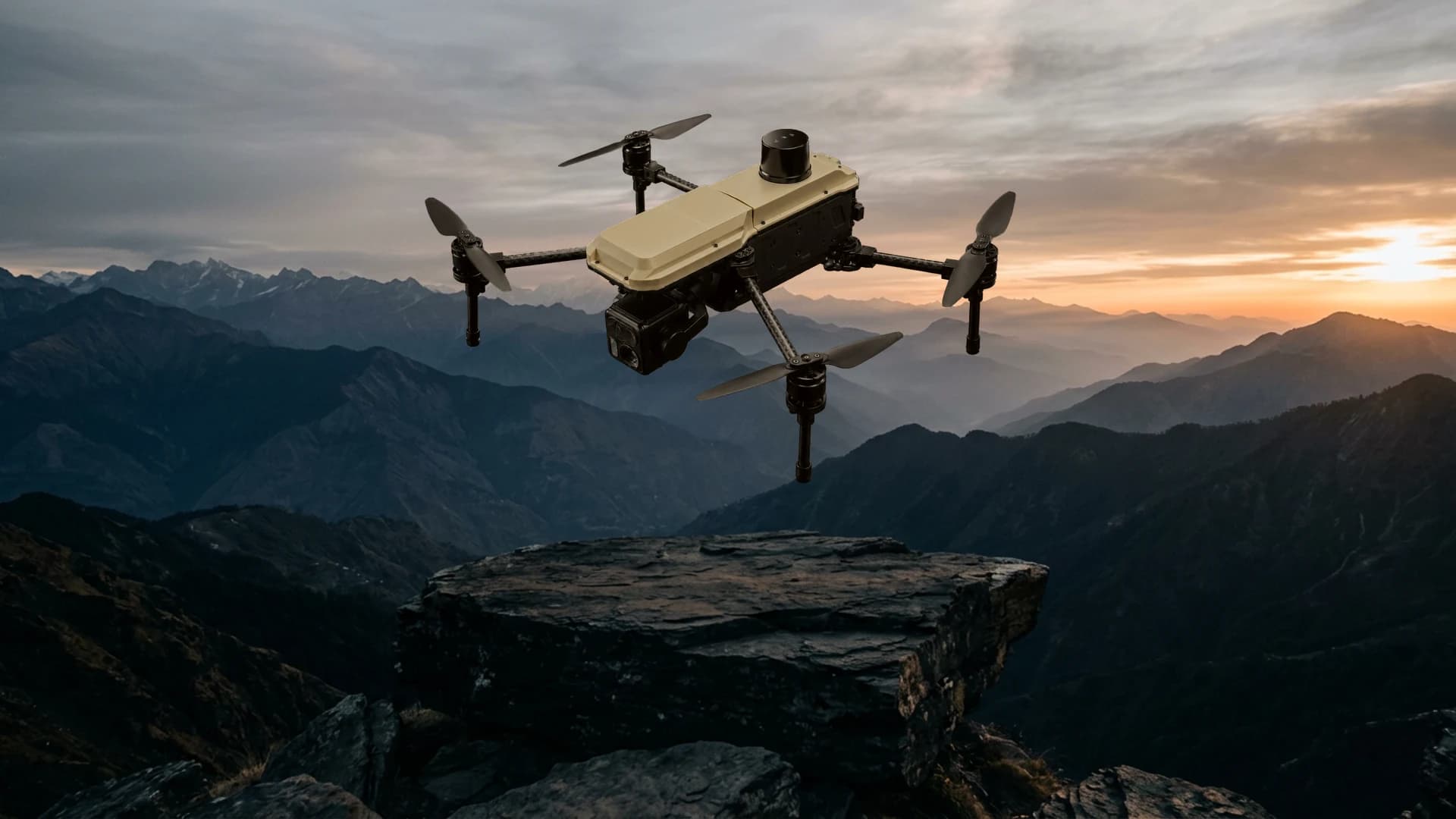
Designed for longer links; Saksham by NVX has about 15 km range.
Signal is easily blocked.
Anything between you and the drone weakens the link.
Wi-Fi, mobile towers and power lines in cities cut range.
Point the controller's antennas correctly; do not aim the tips at the drone.
You need enough battery to come back, often into the wind.
In India, drones are generally flown within visual line of sight (VLOS) unless specifically permitted. Beyond visual line of sight (BVLOS) operations need special permission. So even if your drone can fly kilometres away, keep it where you can see it.
FAQ
Camera drones can reach several kilometres in open areas, but city interference reduces that sharply, and Indian rules generally require visual line of sight.
Most GPS drones trigger return-to-home. Set a safe return altitude above trees and buildings before flying.
Saksham has about 15 km range for enterprise missions.
Only with specific permission. Normal flights should stay within visual line of sight.
Check the last known position in your flight app. If it crashed, NVX can inspect and repair it.
Get a quote
NVX replies with a recommended configuration and quotation.
Related